
 Roxanne
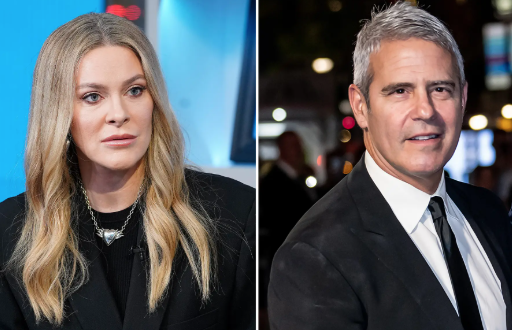
The legal battle between former Real Housewives of New York City star Leah McSweeney, Andy Cohen and Bravo may officially be over, but newly uncovered court documents are offering a rare look at what really goes on behind the scenes of the Housewives franchise.

And some of the contractual requirements may surprise longtime Bravo viewers.
Following the resolution of Leah’s lawsuit, Reality Blurred examined previously filed court documents containing her original RHONY contract, subsequent agreements and a set of rules known as the “Bravo Talent Guidelines.”
The documents shed light on everything from how Housewives are paid and how much control producers have over filming to whether cast members can publicly criticize one another, accept sponsorships or promote their own businesses.
Perhaps most surprising is that cast members may even be required to share a portion of revenue from businesses that receive significant exposure on the show.
The revelations come shortly after Leah’s more than two-year legal battle with Bravo and Andy Cohen came to an end.
On October 30, 2026, Leah voluntarily dismissed her lawsuit with prejudice, meaning she cannot refile the same claims.
The terms of the resolution have not been publicly disclosed, but Leah’s attorney, Gary Adelman, expressed satisfaction with the outcome.
“We are extremely satisfied with the outcome,” he told Page Six, adding that he was proud of Leah and her perseverance.
Leah initially filed her lawsuit in February 2024, accusing Bravo, Andy and production companies associated with the franchise of creating a toxic working environment that allegedly exploited her struggles with alcohol.
She claimed producers pressured her to drink and deliberately created situations that could worsen her personal struggles for the sake of television.
The lawsuit also included allegations that Andy used cocaine with certain Housewives and provided preferential treatment to cast members who participated.
Andy denied those allegations.
Although the case is now closed, the settlement did not result in a public trial verdict establishing whether Leah’s accusations were true.
However, the litigation left behind documents that provide an unusually detailed look at the contractual obligations facing at least one Housewife.
According to Reality Blurred, Leah’s original 2019 RHONY contract consisted of four pages outlining individualized terms, followed by a nine-page appendix titled “Standard Terms and Conditions.”
The documents also contained the network’s expectations regarding professionalism, publicity and business opportunities.
Leah’s 2020 renewal for Season 13 and her 2022 agreement for The Real Housewives Ultimate Girls Trip Season 3 continued to reference the standard terms in her original contract.
While the documents offer insight into Bravo’s contractual practices, it is important to recognize that they are Leah’s agreements. They do not establish that every Housewife across every franchise has signed identical terms.
One particularly interesting revelation concerns how Housewives are compensated.
Although Leah’s actual salary was redacted from the court documents, the agreement outlines a payment structure that distributes compensation throughout production.
According to Reality Blurred, the contract provides for 25 percent of a cast member’s fee upon signing, followed by 30 percent eight weeks after filming begins.
Another 30 percent is paid after filming concludes, while the final 15 percent is tied to the reunion, if one takes place.
The documents also indicate that Housewives classified as main cast members and secondary participants are compensated differently.
In Leah’s original agreement, she was initially described as a “Secondary Participant,” with the possibility of becoming a “Main Participant.”
By the time Season 12 premiered, however, Leah had joined the show’s main cast.

The agreements also provide for percentage-based increases in compensation when a cast member returns for another season, although the specific percentage was redacted.
But the financial details become even more interesting when it comes to Housewives using the show to promote their businesses.
Over the years, Bravo viewers have watched cast members launch everything from clothing lines and restaurants to alcohol brands, skincare companies and lifestyle products.
However, Leah’s contract indicates that receiving significant exposure on the show can come with financial obligations to the network.
According to Reality Blurred, the agreement contains a provision requiring royalty payments on certain new businesses once they reach a specified revenue threshold and receive sufficient exposure.
That exposure is defined as appearing in at least five episodes or ten scenes.
The provision raises interesting questions about how cast members financially benefit from the platform Bravo provides.
While some Housewives have successfully built businesses that extend far beyond reality television, the contract suggests the network may also be entitled to compensation under specific circumstances.
The documents do not establish that Bravo collects royalties from every business featured on Housewives, nor do they disclose how frequently the provision has been enforced.
Leah’s contract also identifies her existing business interests, including her clothing brand Married to the Mob, which were addressed separately within her agreement.
Still, the provision offers insight into why Housewives business ventures and their exposure on the series may involve negotiations beyond a cast member’s regular salary.
The network’s control extends to outside sponsorships as well.
According to the Bravo Talent Guidelines obtained by Reality Blurred, cast members are required to obtain approval before accepting endorsement and sponsorship opportunities.
That approval process can extend to something as seemingly simple as tagging a brand on social media.
Bravo may consider whether a potential deal conflicts with its advertisers, whether the show is currently airing and whether other Bravo personalities are involved.
The guidelines also indicate that the network may consider additional factors that aren’t necessarily disclosed to the cast member.
For Housewives who regularly promote products on Instagram, participate in paid partnerships or pursue brand collaborations, the provision is particularly noteworthy.
However, those restrictions are not the only surprising details revealed in the documents.
The agreement also outlines extensive filming obligations.
Cast members must provide production with access to their personal and professional lives for a sufficient number of days, with the production company determining what amount of access is necessary.
Their obligations aren’t limited to appearing in scenes that ultimately air on television.
The contract also includes participation in voiceovers, opening and closing segments, pickups, reshoots and other production-related activities.
That means the work of filming Housewives can extend beyond the spontaneous group events and personal conversations viewers see each week.
The documents also address transportation and travel expenses.
According to Reality Blurred, the agreement provides for travel, accommodations and per diem expenses when cast members are required to film or participate in publicity outside their usual location.
This is an interesting detail considering how frequently cast trips are presented on television as vacations organized or hosted by individual Housewives.
While the contract doesn’t establish who pays for every trip featured on the franchise, it confirms that production-related travel expenses are addressed in the agreements.
Another provision gives producers broad authority over filming decisions and requires cast members to comply with reasonable and lawful instructions.
The agreement also grants extensive rights to the production company to use the cast member’s likeness, voice and recorded participation in the show.
Perhaps one of the more startling clauses involves a cast member’s ability to continue working if their health or physical appearance changes.
According to Reality Blurred, the agreement contains provisions allowing suspension or termination after seven consecutive days or ten cumulative days of incapacity.
The definition includes physical or mental illness, impairment and certain significant changes in appearance or voice.
Although the language is broad, the documents do not establish how frequently Bravo has relied on such provisions or how they might apply under current laws and individual circumstances.
But it is another example of how much the network addresses in its contracts before filming even begins.
The Bravo Talent Guidelines also reveal strict expectations about what cast members can say publicly.
One provision restricts Housewives from making excessively negative or critical public remarks about Bravo, the production company, other Bravo personalities or their family members.
That requirement may surprise fans considering that public feuds and outspoken criticism are often central to the Housewives franchise.
While cast members regularly exchange insults during filming, the contractual language indicates that their ability to criticize one another outside the show may be more restricted.
The guidelines also prohibit unauthorized disclosures about production.
That includes revealing casting information, filming details, editing decisions or other developments that Bravo has not officially announced.
For fans who closely follow Housewives rumors and casting speculation, the provision offers an explanation for why cast members sometimes avoid confirming information even when reports are circulating publicly.
And the requirements extend beyond social media.
According to the documents, Housewives must obtain Bravo PR approval for public speaking engagements, media appearances and interviews.
The guidelines call for at least 48 hours’ notice, meaning even podcast appearances and red-carpet interviews may be subject to the network’s approval process.
The agreement also ties potential bonuses to compliance with these expectations.
That means following the network’s rules may have financial implications beyond a cast member’s ordinary compensation.
The revelations are especially interesting given how frequently former Housewives have discussed their experiences with production after leaving their respective franchises.
Some have accused producers of manipulating storylines or favoring particular cast members, while others have described feeling pressured to participate in situations they would rather avoid.
Leah’s lawsuit brought many of those broader questions about reality television production into the legal spotlight.
During the proceedings, a federal judge addressed the distinction between the creative decisions producers make when developing a reality series and allegations about how cast members are treated behind the scenes.
The court recognized that producers have significant First Amendment protections when determining the type of program they want to create, including reality television centered on social gatherings and drinking.
However, that did not automatically resolve every allegation Leah made about her treatment.
The legal battle also included a dispute over whether the case should proceed through arbitration rather than public court proceedings.
Ultimately, the parties agreed to end the litigation before a trial, leaving no final verdict on the underlying allegations.
But the public documents have now provided fans with information they rarely get to see.
For years, Housewives have spoken about negotiating salaries, securing brand deals and managing their public images while appearing on Bravo.
Leah’s contract offers a closer look at the rules governing at least one cast member’s experience.
From approval requirements for endorsements and interviews to royalty provisions for new businesses, the agreements reveal how closely the network can regulate the professional opportunities connected to appearing on the show.
They also highlight the difference between what audiences see on television and the contractual obligations operating behind the scenes.
While viewers may see Housewives freely arguing, promoting businesses and planning elaborate trips, the documents demonstrate that many aspects of their participation are governed by detailed agreements.
And although Leah’s lawsuit has officially concluded, the release of these contractual details has opened a new conversation about what it actually means to sign on as a Real Housewife.
The documents were examined by Andy Dehnart of Reality Blurred, who published his findings on November 7, 2026, along with access to the agreements filed in the case.
For longtime Bravo fans, the revelations offer a rare glimpse into the business behind the drama.
